March 8th – International Woman’s Day March 21st – International Day for the Elimination of Racial Discrimination March 31st – Transgender Day of Visibility –> this one has been strategically removed from many websites including those powered by AI!
Hopefully my article will shed some light on how to render our classes inclusive and welcome to all our learners. Click below to view article.
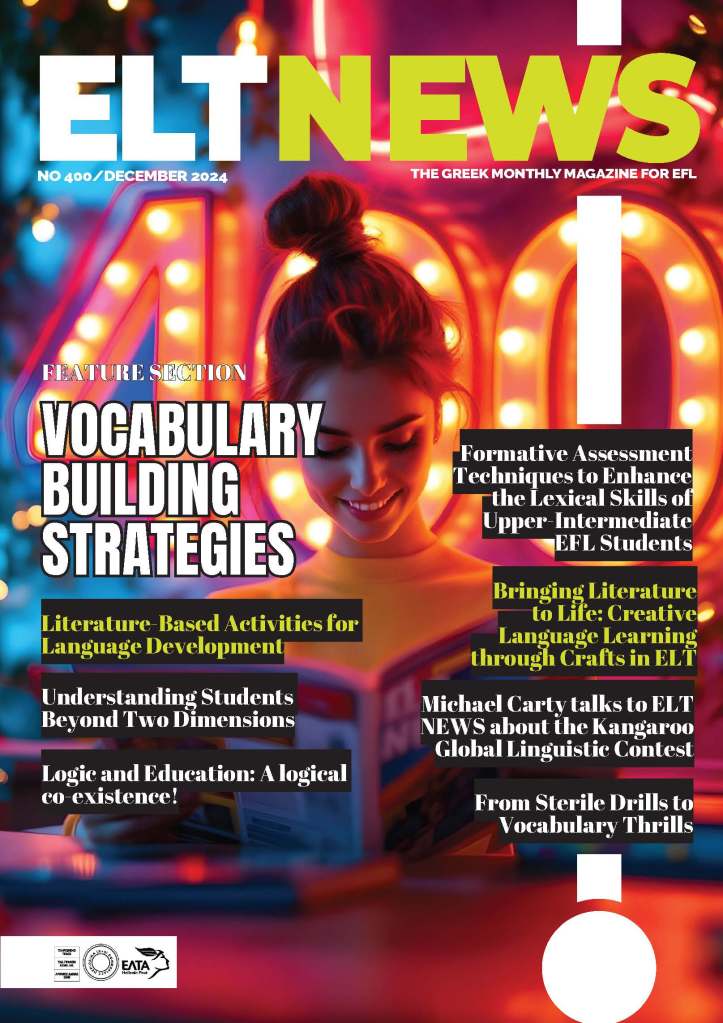
400 issues with over three decades of content! Not many can boast such a feat in the field of English Language Learning. I am grateful for being a small part of this extraordinary venture and would like to thank our beloved chief editor Anastasia Spropoulou for her trust in me. Five years as a regular writer for ELT NEWS has offered me the opportunity to share my academic experience and foster self-improvement. For those of you who haven’t read the printed publication yet, here is a link to my latest article: ” From Sterile Drills to Vocabulary Thrills!” link: https://lnkd.in/dymsJ4WA
Picture this: a bright, buzzing classroom filled with eager eyes, crayons littering the tables like confetti, and one lone teacher armed with a flashcard pack and a prayer. Welcome to the world of teaching vocabulary to young learners – a chaotic yet rewarding educational experience for all parties involved. Now, buckle up as we take a laugh-filled tour through this quirky adventure, complete with treasure hunts, tongue-tied moments, and unexpected twists and turns.
“Class, today we’re going on a treasure hunt!” I announce with dramatic flair.
Instantly, their eyes light up, and the chatter intensifies. I scatter colorful vocabulary cards around the classroom while explaining that each card they find will hold a magic word to be decoded. Chaos reigns supreme. Some students sprint, while others crawl beneath desks as if seeking hidden fortunes.


 Katherine Reilly