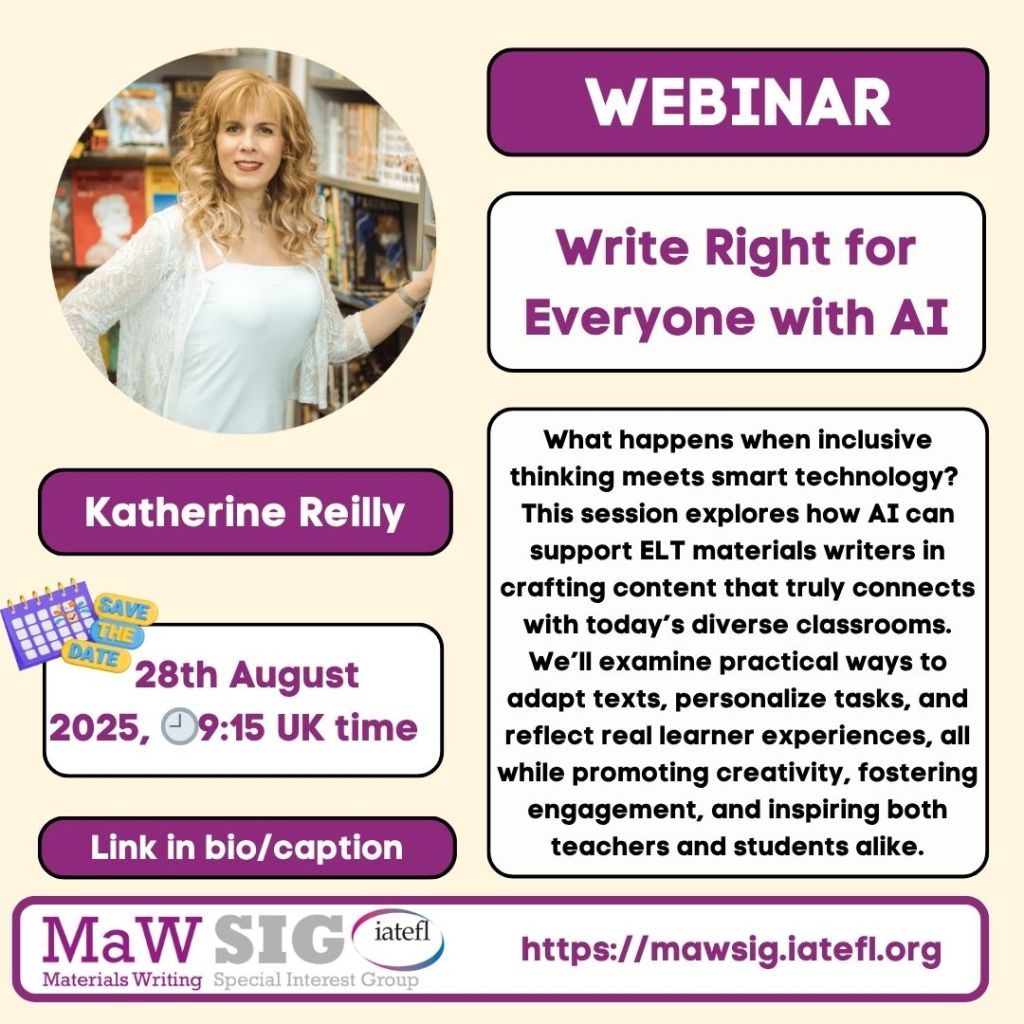
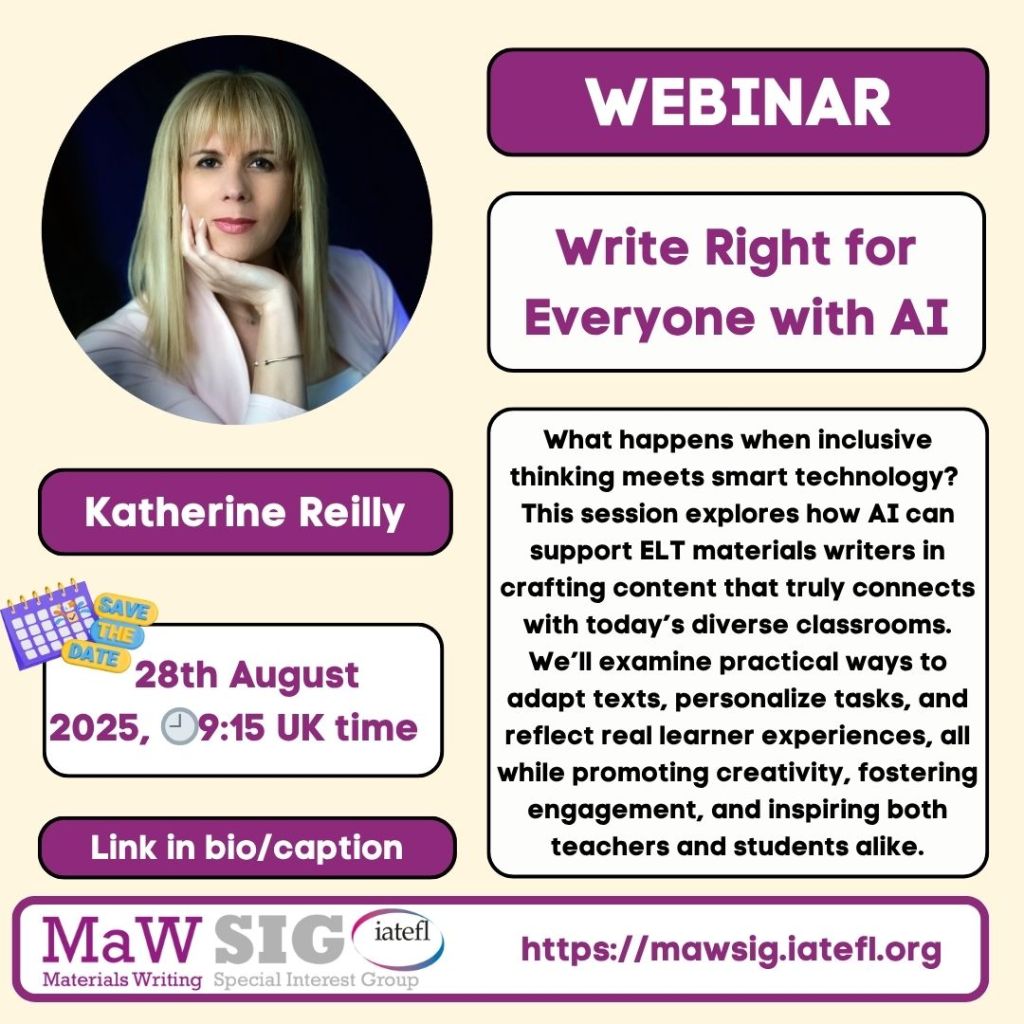
IATEFL MaWSIG Free Webinar

Iatefl Materials Writing SIG’s next webinar will feature Katherine Reilly, renowned ELT author and teacher trainer, who will explore how AI can empower materials writers to create more inclusive, personalised, and learner-centred content.

Katherine brings her expertise to help us rethink materials writing for the future. She specialises in learner-centred teaching and has delivered sessions on Inclusive AI for the British Council and multiple IATEFL SiGs. She has published extensively in ELT and children’s literature, serves as an oral examiner, and is a regular contributor to ELT NEWS magazine on equitable and accessible teaching practices.

👉 Free for all to attend! Don’t miss this opportunity to gain insights from her inspiring work!

🔗 Sign up now via the link in bio / IATEFL website: https://www.iatefl.org/event-details/#/?id=703

To Cheat or Not to Cheat: The Tragicomedy of ELT Exam Day

Image by freepik

Ever caught your students cheating during a test? Most likely, yes! Meet John, a candidate in an English certification exam who had no intention of commiting to the demands of learning the language. Get ready for a rollercoaster ride of tragic – albeit hilarious – proportions, as his cheating attempts lead to unforseen circumstances!

by Katherine Reilly, Author | Teacher Trainer

Continue reading “To Cheat or Not to Cheat: The Tragicomedy of ELT Exam Day”

Uncovering Hidden Meaning in our Teaching Materials

I had the privilege of speaking on TESOL Pop about Critical Discourse Analysis (CDA) and how it can help educators identify hidden meanings, assumptions, and power dynamics within their teaching materials so we can make changes that foster a more inclusive and supportive environment.

Key talking points

Understanding Critical Discourse Analysis (CDA)
CDA is an approach that examines how language and imagery in teaching materials can shape social realities, reinforce stereotypes, and influence ideologies. Katherine emphasises the importance of ensuring materials reflect diverse voices, backgrounds, and experiences.

Gender and Stereotypes in Textbooks
Katherine shares examples of how textbooks can reinforce outdated gender roles, such as referring to professionals as “policemen” or “firemen” instead of using gender-neutral terms. She discusses how such representations can limit students’ perceptions of their future potential.

Adapting Materials for Inclusivity
Katherine stresses that no single textbook can fully meet the needs of all learners. Teachers should adapt materials to reflect different cultures, abilities, and perspectives. She encourages educators to use inclusive visuals, update resources, and incorporate diverse voices.

Continue reading “Uncovering Hidden Meaning in our Teaching Materials”