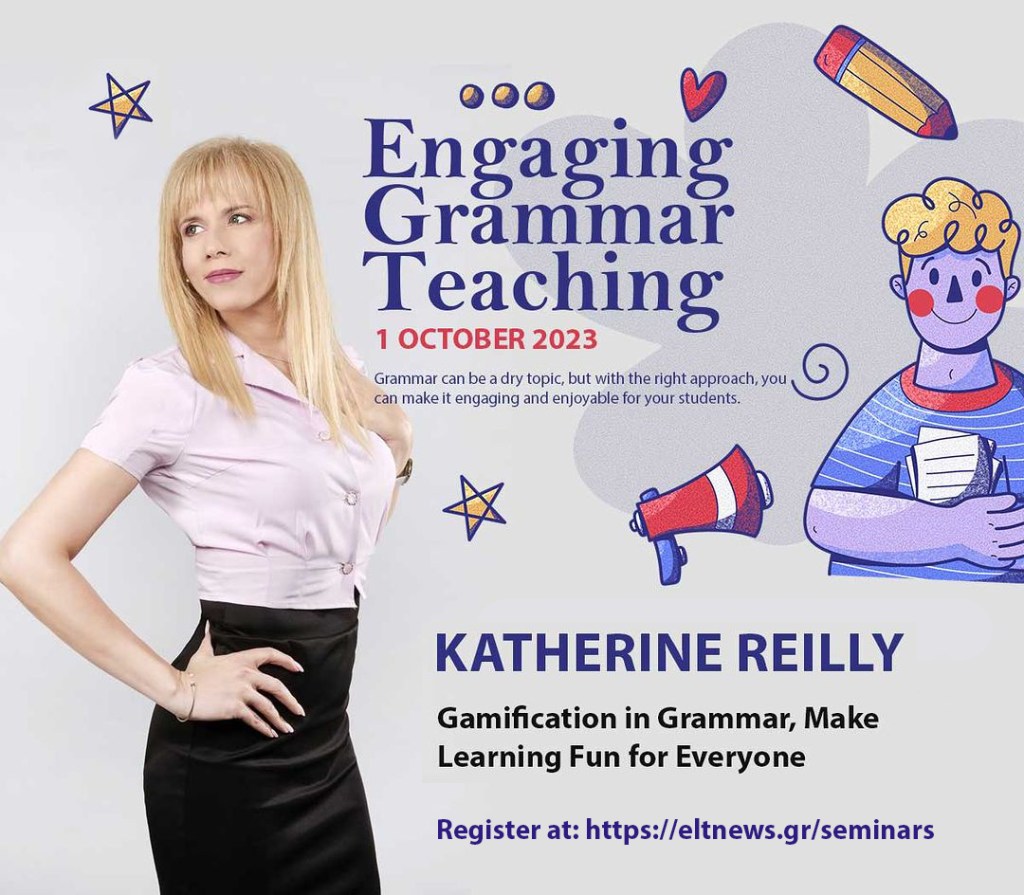
When teaching a class, one must bear in mind a plethora of elements associated with cultural and social diversity. The special educational needs and abilities of each individual student must also be taken into account. Modern textbooks cater to a general audience and must be adapted accordingly to provide an inclusive lesson which can be accessible to all. Special thanks to the Foreign Languages Forum for organizing this prestigious event at the Royal Olympic Hotel. Registration is free and the attendees will receive a special gift I will be offering at the end of the presentation. Looking forward to seeing you all. Happy summer!
by Katherine Reilly, originally published in ELT NEWS
A Heart to Heart about an Educator’s Role Today
“Doesn’t anyone know the answer to my question?” you gently sigh, as half your class simply ignores your presence. You desperately direct the question to a specific student – a last attempt at rectifying the uncomfortable predicament you find yourself in – receiving an answer which will only add salt to injury. “I don’t care if I learn English or not. So, stop insisting.”
Does this sound all too familiar? No, this is not an 80s teen movie, featuring disgruntled, directionless teenagers who are in desperate need of a leader who will motivate them and, in the end, will bond as a family unit. This is a harsh reality most of us are dealing with. You might be scratching your heads wondering if this was always the case or not. Admittedly, teenagers have through the years consistently exhibited a rebellious nature, rendering it a constant challenge to keep them motivated and focused on their obligations, inspiring them to set goals to pursue in life. However, society has fundamentally changed and although our teenage students do remind us of our own adolescent years, there are many acute differences which have led to their dismissal behavior.
Teaching young learners how to speak is no easy task. It’s actually one of the greatest challenges both students and teachers must face together. Finding the courage to speak in front of the other students, while also using the correct pronunciation is in itself a huge undertaking. When will the student be able to start a conversation in class while also feeling confident in doing so? Techniques concerning external stimuli, as well as practical methods of influencing a young learner’s mind to develop his thought into verbal communication will be presented and assessed, leading to confident and fluent speakers of the language.